The AI implementation playbook for talent acquisition
Your CEO and CFO are asking about AI's potential for efficiency. Your team is asking about its threat to their jobs.
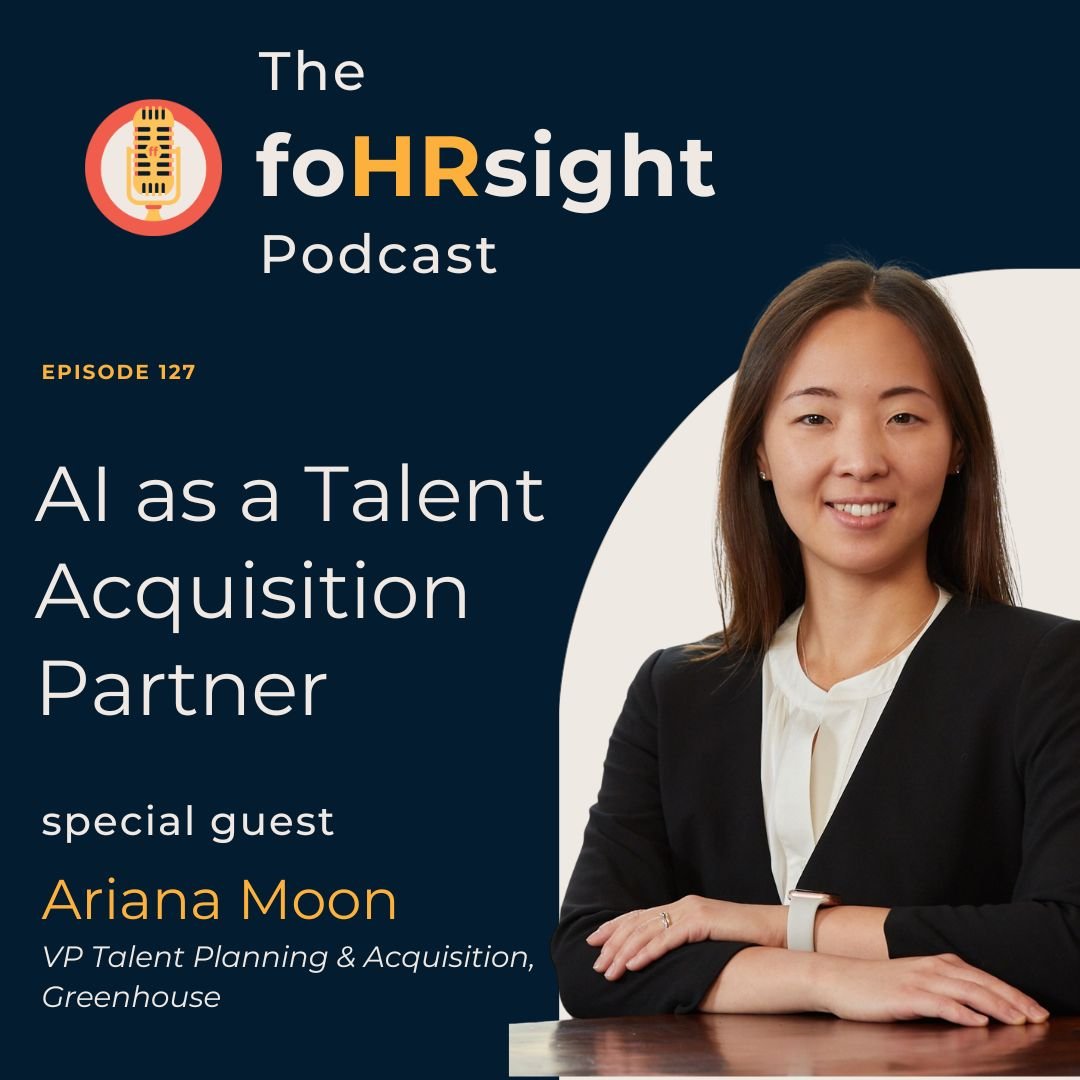
To answer these critical questions, we'll draw on insights from Ariana Moon, VP of Talent Planning and Acquisition at Greenhouse, who has guided the company's talent function through explosive growth—from 50 to 700 employees over 10 years—while pioneering responsible AI adoption in recruiting.
Ariana's core philosophy forms the foundation of everything that follows: "AI is really a copilot. It's not autopilot. You still need to be the one making the calls, making decisions."

The efficiency imperative
Ariana explains the fundamental value proposition: "I think when it comes to the main benefits of AI... the sky's the limit, especially when it comes to taking manual, repetitive, tedious tasks off people's plates, whether it's in the recruiting profession or not. So efficiency is a big advantage."
At Greenhouse, Ariana's team is experiencing this efficiency firsthand with AI-powered interview questions: "One of the most time consuming things about designing an interview process is thinking about the scorecard of attributes and then it's actually crafting questions that will speak to those attributes. That is super time consuming." Their solution? "We just started experimenting with AI-powered interview questions. It's already cutting out a lot of time when it comes to having to start from a blank slate and not knowing where to start."
AI's applications extend across the hiring process: "You might have AI helping you generate job descriptions. You might have AI participating in ways where it's with you in interviews and providing you interview summaries so you don't have to take notes and not pay attention to the person that you're talking to across the screen."
The non-negotiable: Human oversight
Despite AI's efficiency gains, Ariana emphasizes the critical need for human judgment: "We do consider this as a really great starting point. We still place a lot of importance on the human oversight piece because you can't just click a few buttons and run with a bunch of questions without reviewing them or actually putting some concrete thought into it."
This philosophy extends to all AI applications: "We're not convinced yet that it's capable fully of making end-to-end decisions without human intervention when it comes to hiring decisions."
Establishing governance first
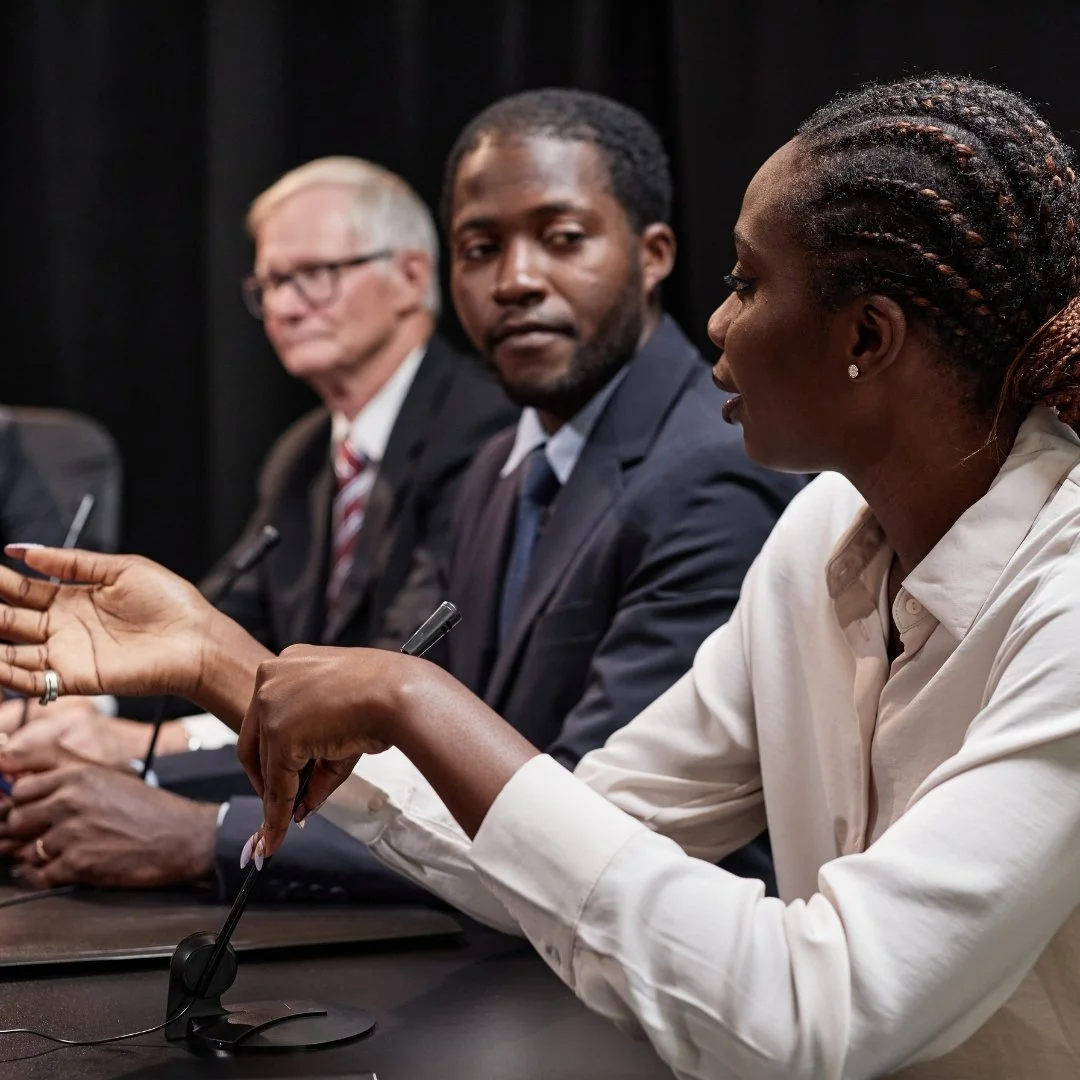
Ariana details how Greenhouse proactively addressed AI governance: "One of the things that we put together at Greenhouse, and it's still early stages, is an AI enablement committee as well as the AI ethics committee. And what we made sure is that we had cross-functional representation from all departments."
Their comprehensive risk assessment identified multiple concerns: "There are ethical concerns, there are security risks there, there are data privacy issues. For example, you might get operational inefficiencies if five different teams are trialing five different AI tools that do the same thing and that are competitors with each other."
The committee established three clear objectives around "education, adoption, and efficiency"—ensuring the organization learns together, selects value-driving tools, and clearly measures AI's impact.
Confronting bias and ethical risks
Ariana acknowledges the fundamental challenge: "The models are designed on data that we've created... So it fundamentally goes back to our perspective and lens of the world".
She's candid about current limitations - specifically, bias: "There are a lot of stories out there where it's very clear that there was bias in the technology."
Ariana shares a concerning real-world example: "We had this instance within the realm of our people practices... where AI had totally made up a scenario. These kinds of hallucinations are going to happen."

The evolution of recruiting roles
Ariana addresses job displacement concerns directly: "I mentioned scheduling automation earlier and one really big discussion in the talent acquisition space is if interview scheduling gets automated by AI then, you might not have as much of a reliance on the recruiting coordinator role."
However, she emphasizes thoughtful transition: "But then it opens up this very interesting conversation about what entry level looks like if someone wants to get their foot in the door in the recruiting profession?"
The key is preserving development opportunities: "The value of some of these more administrative roles is the exposure you got from them. You got to meet people. And I think there's still a way for that to happen, but it has to be deliberate."
Adapting assessment for the AI era
AI is forcing evolution in candidate evaluation. Ariana explains: "It's very easy now to create a deck with a click of a button, take information from the internet, give it a prompt, and then it spits out something and often it looks really good."
Their solution focuses on deeper evaluation: "So we've had to shift a little bit away from using that as a pass fail... and then using that more as a starting point for a very live involved discussion around thought process."
Rather than fighting AI use, Greenhouse embraces transparency: "We're not so concerned about banning people using AI in their interview process. We actually have a whole policy that we publish on our careers page that says we're actually okay with it, more or less, as long as you're transparent about the use of it."
Ariana emphasizes what AI cannot replicate: "At least at this point, AI can't necessarily speak for the experience you bring to the table. And so if you go to the core of that and like how that informs the way that you operate as the leader or whatever role that you're interviewing for, we found those conversations to be a lot more productive."

Your implementation roadmap
Based on Ariana's insights, here's your practical framework:
Start with governance, not technology. Establish cross-functional committees before selecting tools. As Ariana notes: "Committees like this become an internal compass for the organization to help navigate like this very, very fast changing landscape."
Prioritize education and human partnership Approach AI as collaboration: "We really see AI as a partner here, not as something that's just completely running with something and taking it fully off our plates."
Plan role evolution deliberately Remember Ariana's warning: "Our jobs will inevitably evolve. And just because it doesn't look the same as it did in the past, doesn't mean it's necessarily a bad thing, but it can become harmful if you aren’t deliberate about development."
The Path Forward
The future of talent acquisition isn't about choosing between humans and machines—it's about orchestrating them together effectively. As Ariana concludes: "We are super excited for the ways that it will advance the ways that we do things, and at the same time, we're very mindful that it still needs that oversight."
Your success depends on embracing AI's efficiency gains while maintaining the human judgment, relationship building, and strategic thinking that make great recruiting possible. The leaders who thrive will approach AI as Ariana does—as a powerful copilot in service of better human connections and more effective talent decisions.